Business Analysis
Business Analysis
Turning Business Complexity Into Clear Direction
Modern organizations generate large amounts of data, processes, decisions, systems, and operational dependencies.
Yet many businesses still struggle with unclear workflows, disconnected departments, inefficient operations, delayed decisions, poor technology alignment, and transformation initiatives that fail to deliver measurable outcomes.
This is where Business Analysis becomes critical.
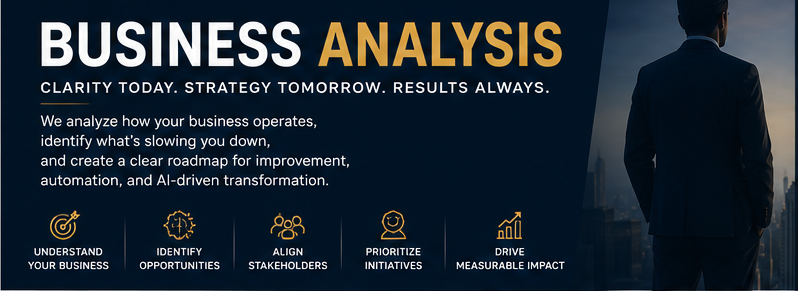
At Know Loss, Business Analysis is positioned as a practical business capability focused on understanding how an organization operates today, identifying where inefficiencies exist, and creating structured direction for improvement, transformation, automation, and AI adoption.
Business Analysis helps organizations move from assumptions toward clarity.
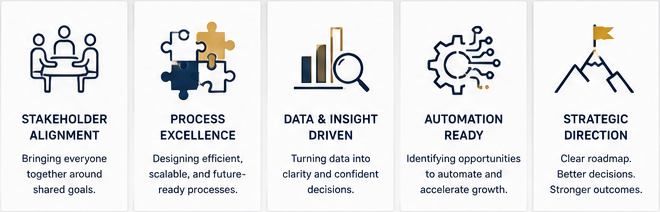
It creates alignment between business goals, operational realities, technology capabilities, and execution direction.
What Is Business Analysis?
What Is Business Analysis?
- Operational inefficiencies
- Workflow bottlenecks
- Process gaps
- Data limitations
- Technology disconnects
- Communication breakdowns
- Manual dependencies
- Automation opportunities
- AI and analytics potential
- Strategic improvement areas
Why Business Analysis Matters
Why Business Analysis Matters
Many organizations attempt transformation before achieving operational clarity.
Technology alone does not solve business problems.
Organizations first need to understand:
- What problems actually exist
- Which processes create friction
- Where inefficiencies originate
- What data is available
- What decisions are delayed
- Which workflows can be automated
- Which AI opportunities are realistic
- What operational impact is expected
- How teams and stakeholders interact
- What implementation constraints exist
Business Analysis creates this foundation.
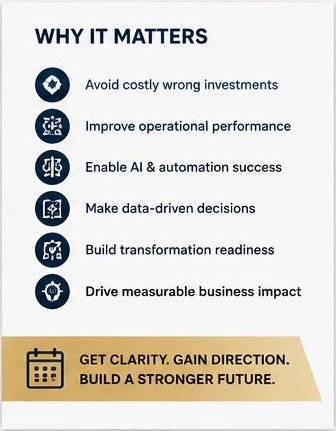
It reduces uncertainty before major investments are made.
It allows organizations to make structured, informed, and measurable decisions.
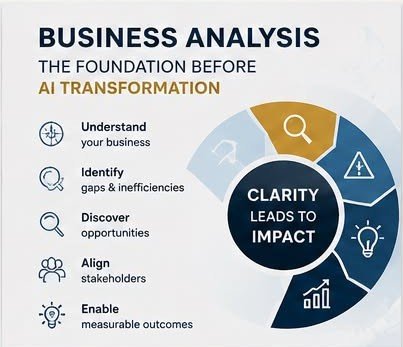
Business Analysis Before AI Transformation
Business Analysis Before AI Transformation
Many organizations rush toward AI adoption without first understanding their operational environment.
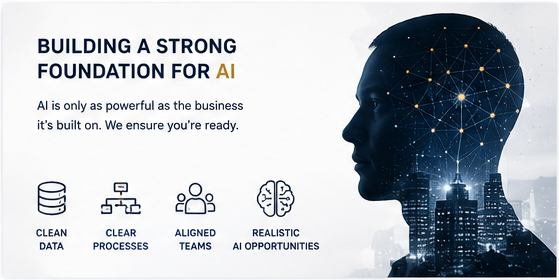
AI cannot fix unclear workflows, fragmented processes, poor data quality, disconnected systems, or undefined business objectives.
Successful AI transformation requires:
- Process clarity
- Operational understanding
- Defined business priorities
- Structured workflows
- Reliable data
- Stakeholder alignment
- Clear implementation direction
Business Analysis creates the foundation required for successful AI and digital transformation initiatives.
At Know Loss, Business Analysis is not treated as isolated documentation work.
It is positioned as a strategic business capability that helps organizations prepare for intelligent transformation realistically and responsibly.
Key Benefits of Business Analysis
Key Benefits of Business Analysis
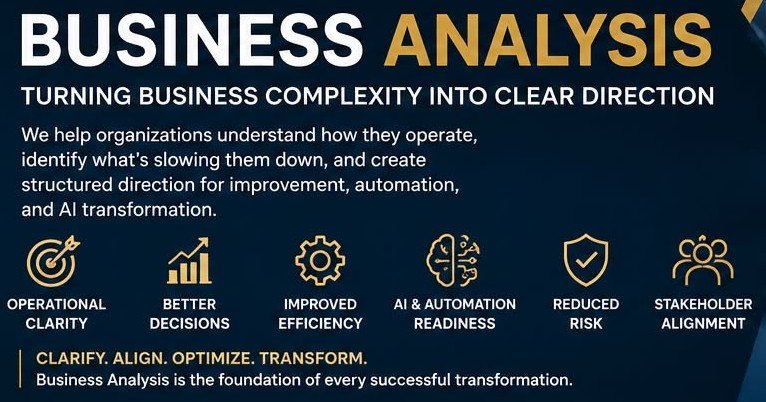
Operational Clarity
Understand how the organization truly operates across departments, workflows, systems, and decision chains.
Better Strategic Decisions
Enable leadership teams to make decisions based on evidence, workflows, operational insights, and measurable priorities.
Improved Efficiency
Identify unnecessary processes, duplicated work, delays, manual dependencies, and workflow inefficiencies.
Stronger AI & Automation Readiness
Business Analysis helps identify where AI, automation, analytics, and intelligent systems can realistically deliver value.
Reduced Transformation Risk
Avoid investing in disconnected initiatives that lack operational alignment or measurable business outcomes.
Better Stakeholder Alignment
Create shared understanding between leadership teams, operational departments, IT teams, vendors, and implementation partners.
Improved Technology Direction
Ensure systems, platforms, vendors, and implementation plans align with actual business requirements.
Measurable Business Outcomes
Focus transformation efforts on areas capable of delivering operational, financial, and strategic impact.
How Business Analysis Is Used
How Business Analysis Is Used
Business Analysis can support organizations across multiple areas of operation and transformation.
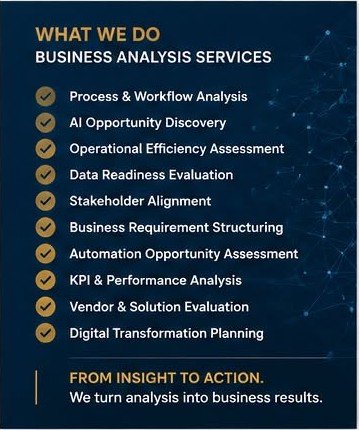
Process & Workflow Analysis
Evaluate operational workflows to identify inefficiencies, delays, duplication, and optimization opportunities.
AI Opportunity Discovery
Identify realistic AI, analytics, automation, and intelligent system opportunities aligned with business value.
Operational Efficiency Assessment
Analyze business operations to improve productivity, coordination, decision-making, and execution flow.
Data Readiness Evaluation
Assess data availability, quality, structure, accessibility, and organizational readiness for analytics and AI initiatives.
Stakeholder Alignment
Bridge communication gaps between leadership, operational teams, IT departments, vendors, and delivery teams.
Digital Transformation Planning
Support structured transformation planning with operational realism and execution-aware direction.
KPI & Performance Analysis
Identify measurable operational indicators that support monitoring, optimization, and strategic visibility.
Vendor & Solution Evaluation
Help organizations evaluate platforms, vendors, technologies, and implementation approaches objectively.
Automation Opportunity Assessment
Identify manual processes and repetitive workflows suitable for automation and intelligent optimization.
Business Requirement Structuring
Translate operational challenges into structured business requirements and implementation direction.

Business Analysis & Leadership Alignment
Business Analysis & Leadership Alignment
One of the biggest causes of transformation failure is misalignment between leadership expectations and operational execution.
Business Analysis helps leadership teams:
- Gain visibility into operational realities
- Understand transformation constraints
- Prioritize initiatives strategically
- Improve decision-making clarity
- Align departments around measurable objectives
- Reduce ambiguity during implementation
At Know Loss, communication is simplified into business-focused language that executives, operational teams, and technical stakeholders can collectively understand.
The Know Loss Approach
The Know Loss Approach
Know Loss approaches Business Analysis from a practical, execution-aware, and transformation-focused perspective.
The objective is not to create excessive documentation or theoretical reports.
The objective is to create clarity.
We work closely with organizations to understand operational realities, stakeholder concerns, technology environments, workflow dependencies, and transformation objectives.
Our approach focuses on helping organizations:
- Understand operational gaps
- Identify realistic improvement opportunities
- Align business and technology direction
- Prioritize high-value initiatives
- Reduce execution uncertainty
- Improve transformation readiness
- Build structured implementation direction
- Prepare for AI and automation adoption responsibly
The focus remains on practical business outcomes rather than theoretical transformation language.
Why Organizations Work With Know Loss
Why Organizations Work With Know Loss
Practical Over Theoretical
We focus on realistic business improvement and transformation direction grounded in operational realities.
AI & Business Alignment
We connect Business Analysis with AI, automation, analytics, and intelligent transformation opportunities.
Execution-Aware Consulting
Recommendations are developed with implementation realities, organizational readiness, and operational constraints in mind.
Stakeholder-Centered Approach
We help align leadership teams, business units, IT stakeholders, vendors, and implementation teams.
Business-Focused Communication
Complex operational and AI concepts are translated into structured business direction.
Strategic Yet Practical
The focus remains on measurable outcomes, operational value, and sustainable transformation direction.
Business Analysis For Real Transformation
Business Analysis That Supports Real Transformation
Organizations do not fail because of a lack of technology.
They fail because transformation efforts begin without operational clarity, structured direction, stakeholder alignment, and realistic execution planning.
Business Analysis provides the foundation required to improve operations, support decision-making, identify transformation opportunities, and prepare organizations for AI-driven futures responsibly.
Know Loss helps organizations transform complexity into structured business direction.